Table of Contents
- Understanding Your Large Yard's Needs
- Yard Size and Terrain Assessment
- Grass Type and Desired Finish
- Power Source: Gas vs. Electric (and Battery)
- Gas-Powered Mowers: The Traditional Workhorses
- Electric & Battery-Powered Mowers: The Modern Alternative
- Riding Mowers: The King of Large Yards
- Understanding Riding Mower Types
- Key Features to Look For in Riding Mowers
- Walk-Behind Mowers: When Size Still Matters
- Self-Propelled vs. Push Mowers
- Features for Large Yard Walk-Behind Mowers
- Specialized Mowers for Unique Large Yards
- Robotic Mowers: The Future of Lawn Care?
- Tow-Behind Mowers (Field & Brush Cutters)
- Essential Considerations Beyond the Mower Itself
- Budget and Long-Term Value
- Maintenance and Storage
- Safety Features and Ease of Use
- Conclusion
7 Expert Tips for Choosing the Perfect Lawn Mower for Large Yards
Owning a large yard is a dream for many, offering ample space for recreation, gardening, and simply enjoying the outdoors. However, that sprawling green expanse also comes with a significant responsibility: maintenance. And when it comes to keeping a large lawn looking its best, the most crucial tool in your arsenal is the right lawn mower. The task of mowing can quickly transform from a satisfying chore into a grueling ordeal if you're equipped with the wrong machine. For homeowners with substantial acreage, the options can be overwhelming, and a standard push mower simply won't cut it. That's where informed decision-making comes in. This guide will walk you through 7 expert tips to help you choose the perfect lawn mower for your large yard, ensuring efficiency, comfort, and a beautifully manicured result every time. We'll delve into understanding your specific needs, exploring power sources, dissecting the various types of riding mowers, and even touching on specialized options, all to equip you with the knowledge to make a purchase you won't regret.
Understanding Your Large Yard's Needs
Before you even start browsing models, the most critical step is to thoroughly understand the unique characteristics of your property. This foundational assessment will steer you towards the most suitable mower type and features, saving you time, money, and frustration down the line.
Yard Size and Terrain Assessment
When we talk about a "large yard," we're generally referring to properties exceeding half an acre, and often a full acre or more. However, the actual mowing area can be significantly less than your total property size due to landscaping, outbuildings, or natural features. It's essential to measure the specific area you intend to mow regularly. A quick walk around with a measuring tape or using online mapping tools can provide this crucial data.
Beyond sheer size, the terrain of your yard plays a pivotal role. Is it predominantly flat and open, or are there gentle slopes, steep hills, or uneven patches? The presence of numerous obstacles like mature trees, flower beds, ponds, or garden structures will also influence your choice. For instance, a yard with many tight turns and obstacles will benefit greatly from a mower with superior maneuverability, like a zero-turn model. Conversely, a vast, open, and relatively flat expanse might be best tackled by a powerful lawn tractor with a wide cutting deck. As highlighted in discussions about best lawn mowers for large yards, terrain dictates not just the type of mower but also its power requirements and handling capabilities. A mower that struggles on inclines or can't navigate around obstacles efficiently will turn a manageable task into a significant challenge.

Grass Type and Desired Finish
The type of grass you have is another critical factor. Common grasses found in larger yards across various regions include Tall Fescue, Bermuda grass, and Zoysia grass. Each has different growth habits, blade thickness, and optimal cutting heights. For example, Bermuda and Zoysia are warm-season grasses that can be cut lower and thrive in warmer climates, while Fescue is a cool-season grass that prefers slightly higher cuts.
Your desired lawn aesthetic also matters. Are you aiming for the perfectly manicured, striped look often associated with professional golf courses, or is a uniform, neat cut sufficient? Certain mowers, particularly high-end riding mowers with specialized blade designs and deck configurations, are better equipped to produce those coveted stripes. The cutting height adjustment mechanism is also important; look for mowers that offer a good range of heights to accommodate different grass types and seasonal needs. Understanding how your grass type interacts with different mower blades and cutting heights is crucial for achieving that picture-perfect lawn. For those looking to optimize their lawn's health and appearance, exploring resources on best grass types for your region can be highly beneficial.
Power Source: Gas vs. Electric (and Battery)
The debate between gas and electric power is a perennial one in the world of lawn care. For large yards, this decision carries even more weight, impacting performance, environmental footprint, and user experience.
Gas-Powered Mowers: The Traditional Workhorses
Gasoline-powered mowers have long been the go-to for homeowners with extensive properties, and for good reason. Their primary advantage lies in their raw power and torque. This is essential for tackling thick, overgrown grass, mulching dense clippings, and powering features like self-propulsion or larger cutting decks without significant performance degradation. Gas engines typically offer longer run times, meaning you can mow a larger area on a single tank of fuel without interruption, which is a significant advantage for large yards.
However, this power comes with trade-offs. Gas mowers are generally louder, produce emissions, and require more diligent maintenance. This includes regular oil changes, spark plug replacements, air filter cleaning, and fuel stabilization for storage. You also need to consider fuel storage and the occasional trip to the gas station. When choosing a gas mower, the engine brand and type are important indicators of reliability and performance. Reputable brands like Briggs & Stratton, Honda, and Kohler are known for their durability and power output. For large yards with demanding conditions, higher horsepower engines (e.g., 15-25 HP for riding mowers) are often recommended to ensure consistent performance.

Electric & Battery-Powered Mowers: The Modern Alternative
The landscape of electric lawn mowers has dramatically evolved in recent years, making them increasingly viable options for larger properties. The most significant advantages of electric and battery-powered mowers are their quiet operation, zero emissions, and significantly reduced maintenance requirements. There are no oil changes, spark plugs, or fuel to worry about. Starting is typically as simple as pressing a button.
The primary concern for large yards has historically been run time and power. However, advancements in battery technology have been remarkable. Modern cordless mowers often feature higher voltage (e.g., 40V, 56V, 80V) and larger amp-hour (Ah) ratings, which translate directly to longer run times and more power. For very large yards, you might consider a system with multiple batteries or a mower that allows for easy battery swapping. The emergence of battery-powered riding mowers and even zero-turn models is a testament to the growing capabilities of electric power. These machines can now handle substantial acreage with impressive efficiency. While they may still lag behind the absolute peak power of the largest gas engines for the most extreme conditions, for many large yards, they offer a compelling, eco-friendly, and user-friendly alternative. Exploring cordless lawn mower technology, even for larger yards, can reveal surprising capabilities.
Riding Mowers: The King of Large Yards
For properties that truly qualify as "large," a riding mower is often not just a convenience but a necessity. These machines dramatically reduce mowing time and physical exertion compared to walk-behind models. However, not all riding mowers are created equal, and understanding the different types is key.
Understanding Riding Mower Types
Lawn Tractors: These are the classic workhorses of the riding mower world. Lawn tractors are characterized by their steering wheel operation, comfortable seating, and often a more robust frame. They are highly versatile and can typically accommodate a range of attachments, such as snow blowers, tillers, aerators, and carts, making them valuable year-round tools. For large yards that might also require light landscaping tasks, a lawn tractor is an excellent choice. The transmission type is a significant consideration; while some use manual gear shifting, hydrostatic transmissions (similar to those in automatic cars) offer smoother speed control and are generally preferred for ease of use and maneuverability, especially on varied terrain.
Zero-Turn Mowers (ZTRs): Zero-turn mowers are renowned for their exceptional maneuverability. Their unique steering system, which uses two independent levers to control each rear wheel, allows them to pivot on the spot, achieving a true "zero-turn radius." This capability is invaluable for navigating around numerous obstacles, landscaping features, and tight corners with precision and speed. For yards with many trees, garden beds, or complex layouts, a ZTR can significantly reduce trimming time and effort. They often feature powerful engines and wide cutting decks, making them very efficient for large areas. As seen in reviews of best riding lawn mowers for hills, their stability and power distribution are also key factors.
Rear-Engine Riding Mowers: These are generally smaller and more compact than traditional lawn tractors, with the engine mounted at the rear. They are often more affordable and can be a good option for medium-to-large yards, especially if maneuverability is a priority and the terrain isn't excessively challenging. While they may not offer the same power or attachment versatility as larger tractors, they provide a comfortable step up from walk-behind mowers.
Key Features to Look For in Riding Mowers
When investing in a riding mower for your large yard, several features will directly impact your mowing experience and efficiency:
Cutting Deck Width: This is arguably the most critical factor for large yards. Wider decks mean fewer passes to cover the same area. For properties over an acre, decks ranging from 48 inches to 60 inches or even wider are common. A 54-inch deck, for example, can cut mowing time by approximately 30% compared to a 42-inch deck.
Engine Size/Horsepower: Sufficient engine power is crucial for consistently cutting through tall or thick grass, especially if you plan to mulch or bag clippings. For larger yards and more demanding conditions, look for engines in the 20-25 horsepower range or higher.
Transmission: As mentioned, hydrostatic transmissions are highly recommended for their ease of use and smooth speed adjustment. They allow you to control your mowing speed intuitively, making it easier to navigate obstacles and maintain a consistent cut.
Comfort: You'll be spending a significant amount of time on your mower, so comfort is paramount. Look for features like comfortable, adjustable seating, ergonomic controls, armrests, and potentially even suspension systems to absorb bumps and vibrations.
Turning Radius: While zero-turn mowers excel here, even lawn tractors have varying turning radii. A tighter turning radius will make navigating around obstacles much easier.
Mulching, Bagging, or Side Discharge: Consider how you want to manage your grass clippings. Mulching returns nutrients to the lawn, bagging collects clippings for a cleaner look or composting, and side discharge is the simplest option for faster mowing in less sensitive areas. Many mowers offer the flexibility to switch between these modes.

Walk-Behind Mowers: When Size Still Matters
While riding mowers are often the default for large yards, high-quality walk-behind mowers can still be a viable option, especially if your budget is tighter, or if your "large yard" has many intricate areas that a riding mower might struggle with. However, for efficiency, certain features are non-negotiable.
Self-Propelled vs. Push Mowers
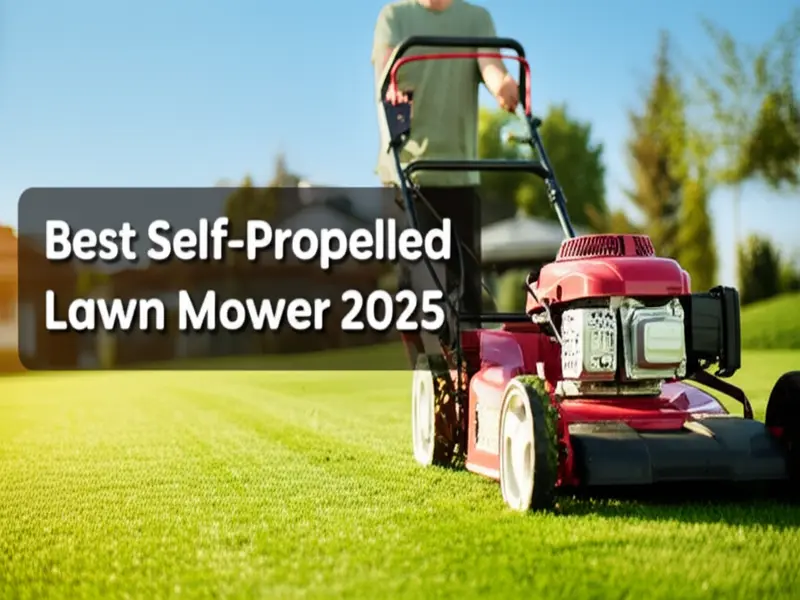
For any yard over half an acre, a self-propelled walk-behind mower is almost essential. These mowers have a drive system that powers the wheels, significantly reducing the physical effort required to push the mower forward. This is a game-changer for larger areas, preventing fatigue and making the mowing process far more manageable. Push mowers, which require you to provide all the forward momentum, are simply not practical for extensive mowing.
When looking at self-propelled mowers, consider the drive system: front-wheel drive offers good maneuverability, rear-wheel drive provides better traction, and all-wheel drive offers the best traction on slopes and varied terrain. The speed control of the self-propel system is also important; variable speed controls allow you to match your pace to the mowing conditions.
Features for Large Yard Walk-Behind Mowers
If you opt for a walk-behind mower for your large property, prioritize these features:
Cutting Width: Look for decks that are 21 inches or wider. While 21 inches is standard, wider decks (e.g., 22-23 inches) will cover more ground per pass, reducing your overall mowing time.
Engine Power: A robust engine is crucial. For self-propelled models, especially those with wider decks or that handle thicker grass, engines in the 150cc to 190cc range are generally recommended. This ensures the engine has enough power to drive the wheels and spin the blade effectively.
Wheel Size: Larger rear wheels (often 8 inches or more) improve maneuverability and make it easier to navigate over uneven terrain, bumps, and small obstacles.
Mulching, Bagging, or Side Discharge: Similar to riding mowers, the ability to switch between mulching, bagging, and side discharge adds versatility and allows you to manage clippings according to your lawn's needs and your preferences.
Ease of Starting: Features like electric start can be a welcome addition, especially on colder days or if you have difficulty with pull cords.
Specialized Mowers for Unique Large Yards
Beyond the traditional categories, there are specialized mowers designed for specific challenges or to offer advanced automation.
Robotic Mowers: The Future of Lawn Care?
Robotic lawn mowers are gaining popularity, and for certain large yards, they can be an excellent, albeit expensive, solution. These autonomous machines operate on a pre-defined schedule, navigating your lawn and cutting the grass to a consistent height. They are incredibly quiet, produce zero emissions, and require minimal user intervention once set up.
However, robotic mowers have limitations. They typically require the installation of a boundary wire around the perimeter of your mowing area and any no-go zones. They may also struggle with very steep slopes, extremely rough terrain, or yards with a high density of obstacles. While they offer a hands-off approach to lawn maintenance, their initial cost is significantly higher than most other mower types. For large, relatively open, and well-defined yards, a robotic mower can provide a consistently manicured lawn with minimal effort.
Tow-Behind Mowers (Field & Brush Cutters)
For those with truly vast properties that include areas of overgrown brush, tall weeds, or thick vegetation, a tow-behind mower, often referred to as a field mower or brush cutter, is the appropriate tool. These powerful machines are designed to be towed behind a tractor, ATV, or riding mower. They are not intended for maintaining a manicured lawn but for clearing and managing rough, unkempt areas. If your large yard includes sections that resemble meadows or fields, a tow-behind mower is essential for reclaiming and managing that land. Understanding the capabilities of such machines is vital for anyone managing extensive rural properties, and resources discussing electric lawn mowers for thick grass can sometimes hint at the power needed for more demanding tasks.
Essential Considerations Beyond the Mower Itself
Choosing the right mower involves more than just comparing cutting decks and horsepower. Several other factors contribute to a successful and satisfying purchase.
Budget and Long-Term Value
Your budget will undoubtedly play a significant role in your decision. However, it's crucial to consider not just the initial purchase price but also the long-term value and running costs. A cheaper mower might seem appealing initially, but if it's less durable, requires frequent repairs, or has higher fuel consumption, it can end up costing more in the long run.
Look for mowers from reputable brands known for their reliability and build quality. Check the warranty offered, as a longer warranty often indicates the manufacturer's confidence in their product. Consider the expected lifespan of the mower and whether spare parts are readily available. Investing in a slightly more expensive but well-built machine can save you headaches and money over the years.
Maintenance and Storage
Regular maintenance is key to ensuring your mower operates efficiently and lasts for many years. This includes keeping the mower clean, sharpening or replacing blades regularly, checking tire pressure, changing oil (for gas mowers), and ensuring air filters are clean. Familiarize yourself with the recommended maintenance schedule in the owner's manual.
Proper storage is also vital. Ideally, your mower should be stored in a shed or garage to protect it from the elements. This prevents rust, protects moving parts, and keeps the mower in better condition. For gas mowers stored over winter, using a fuel stabilizer is essential to prevent fuel system issues. Having access to local service centers or dealers for your chosen brand can also be a significant advantage should you need professional repairs or maintenance. For a comprehensive understanding, exploring lawn mower maintenance tips is highly recommended.
Safety Features and Ease of Use
Safety should always be a top priority. Look for mowers equipped with essential safety features such as blade brake clutches (which stop the blade without stopping the engine), safety guards, and easy-to-reach controls. Ergonomics also play a role in ease of use and comfort. Controls should be intuitive and within easy reach, and the overall design should promote comfortable operation.
Consider the learning curve associated with different mower types. While a zero-turn mower offers incredible maneuverability, it can take some practice to master. Always read the owner's manual thoroughly before operating any new mower. Understanding the machine's capabilities and limitations, and operating it safely, will ensure a positive experience.
Conclusion
Choosing the perfect lawn mower for your large yard is a significant decision that impacts your time, effort, and the overall appearance of your property. By carefully assessing your yard's size, terrain, and your grass type, you can narrow down the options considerably. Understanding the power source – gas versus electric – and the distinct advantages of different riding mower types like lawn tractors and zero-turn mowers will guide you toward the most efficient solution. Don't overlook the features that enhance usability and long-term value, such as cutting deck width, engine power, transmission type, and comfort. Finally, remember to factor in maintenance, storage, and safety.
By following these 7 expert tips for choosing a large yard lawn mower, you can invest in a machine that not only handles the demands of your expansive property but also makes lawn care a more enjoyable and rewarding experience.
Ready to find your perfect mower? Share your biggest lawn challenges or your favorite mower features in the comments below!


No comments:
Post a Comment